
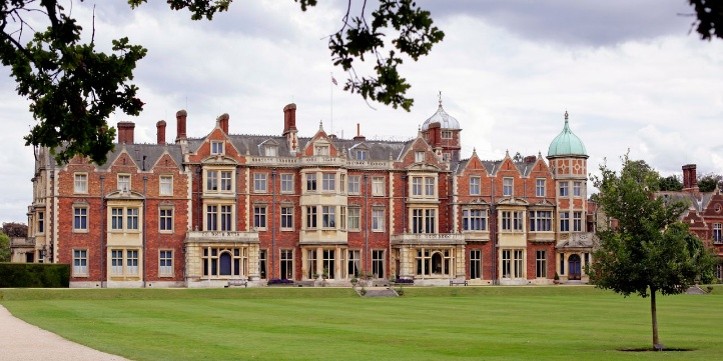
SANDRINGHAM
We knew it was going to be hot (and it was a scorcher) but the event at Sandringham was managed by good planning backed up by science.
Meetings were held and mitigation measures employed to ensure the safety of all the humans and most importantly our equine partners.
• Copious water points – bowsers to supplement the normal water supply plus drinking water stations for easy refilling of water bottles dotted throughout the site.
• Early starts on Friday and Saturday to use the cooler parts of the day to best effect. The stewards reported for duty at 6.30am for a 7am start.
• Gazebos for the stewards on dressage day – forecasted to be the hottest day.
• No jackets, aprons or ties required to be worn for dressage or cones.
• Judges using cars with air-conditioning.
• Shorter marathon distances for all classes – Section A mainly in shade. Section B given an additional 3 minutes on the window so a slower speed could be utilised by the drivers if they wished.
• Obstacles reduced in length – an F gate removed in one obstacle and some others changed from original design.
• Plan for the removal of an obstacle if necessary.
And this was all agreed by the Organising Committee having seen the Met Offices weather warnings.
THE SCIENCE
Some years ago I bought a Heat Stress monitor. I have taken it to events previously but this is the first occasion that the information it provided was actually needed to support decisions made at an event in the UK.
Friday was indeed the hottest day. Keith and I were the stewards at the entrance to the arena after lunch – thank you for the gazebo. I am not sure we would have survived without it.
I took regular readings with the monitor, in full sun, from 6.50am onwards. These readings show the air temperature, the black globe temperature (what it feels like without any breeze) and the relative humidity. The device then uses these figures to calculate the Wet Bulb Globe Temperature – the critical number provided determining if the event can proceed.
The morning readings started well – WBGT of 24.6 but then the numbers started to climb.
Our peak Air Temperature (breeze cooled) was 37.9c at 3pm.
Peak Black Globe was 46c, also at 3pm.
But as the humidity was low – only 30% at that time – the WBGT was 29.3.
The highest WBGT result was 30.2 at 1pm – generated by an AT of 35.6c, a BG of 40.3c but a higher humidity of 43%.
Saturday – marathon day – was not as hot or humid so all readings were lower and well within safe levels with a peak WBGT of 26.7 at 1pm.
Sunday – cones day – was very similar to Saturday.
The FEI have comprehensive information on hot weather conditions and at what levels mitigation measures have to be put in place. The Organising Committee and Officials had already implemented these measures and thankfully the readings did not reach the level where the event could not continue.
Author – Patti Atkinson
Further information available –
PREPARATION FOR AND MANAGEMENT OF HORSES AND ATHLETES DURING EQUESTRIAN EVENTS HELD IN THERMALLY CHALLENGING ENVIRONMENTS CLICK HERE
(This document includes a picture of the device we used at Sandringham)
Name of the device used – Extech HT30 Heat Stress Meter WBGT
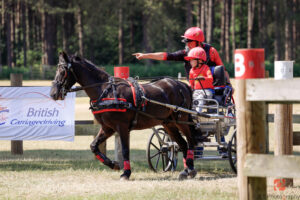
Credit to TT Photography